
Special thanks to WNYBAC members Nicole Lecht and Josh Spaulding who have lent their design talents to our new promo postcard. We hope to do a series of these from guest designers. If interested in this project, just email info (at) wnybookarts.org




Foundry Patterns on Display at WNYBAC
BUFFALO
Buffalo was a steel town. This is an undeniable legacy that helped build the city in the early 20th Century and unfortunately led to its decline towards the end of the century. As the steel industry declined, Buffalo also served as an incubator for an entire new generation of artists and a new “creative class”. The University at Buffalo in the late 1960s was a haven for the avant garde. The low cost of living and diverse population has made Buffalo an attractive place for artists to cultivate their work since.
FOUNDRY PATTERNS
The process of casting objects in metal requires a pattern or replica of the object to be cast to form a cavity into material such as sand. Molten material will then be poured during the casting process. Patterns used in sand casting are made to exacting standards of construction so that they can last for a reasonable length of time and stand up to repeated casting. Patternmaking is a skilled trade that is related to the trades of tool and die making and moldmaking. It may also incorporate elements of fine woodworking. Patternmakers learn their skills through apprenticeships and trade schools over many years of experience. Although an engineer may help to design the pattern, it is usually a patternmaker who executes the design.
PATTERNS AS ART
The patterns in the exhibit were rescued from the Atlas foundry on Elmwood Avenue near Kenmore (current site of the Regal Cinema). The anonymous craftsmen who produced these utilitarian objects may never have imagined an art exhibit showing this work. The choice of colors was not an aesthetic choice, but rather designation as part of the pattern. Looked at as found objects, individually or as a collective body of work, there is undeniable artistry, craftsmanship and an industrial beauty in these pieces. Primary colors over carefully shaped hardwoods such as mahogany evoke a clear, but unknown, intention to these mysterious objects. As the inaugural exhibit for the WNY Book Arts Center, the two-part patterns can be seen as covers for conceptual sculptural books. They can also be seen with fresh eyes as historic relics reminding us of Buffalo’s past with a view towards Buffalo’s future. The concept of what a book is and what art is will be explored and challenged with the WYNYBAC. Our future collaborations with existing cultural organizations will build upon an already dynamic landscape of what makes Buffalo’s quality of life unique and worth enhancing.




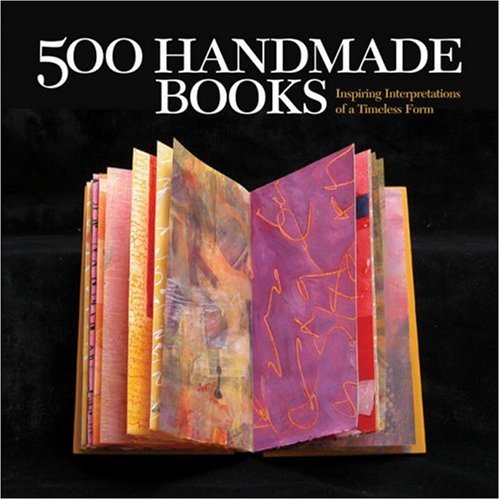


The twenty-one contributions to the first publication of the Western New York Book Arts Collaborative, although boxed in the same style & format as Verse into Type, make an interesting contrast. This is certainly a lively group, no holds barred (the first contribution comes in a slightly retro-looking Agfachrome slide mount), and letterpress is definitely an optional extra. Colour abounds, one uses the third dimension, and while the purists may be startled, there's certainly plenty going on within the confines of the format. Richard Kegler, founder of the P22 type foundry in Buffalo, NY bravely offered to reset and reprint his eye-catching contribution for Matrix. Quite how it all locked up and imposed is known only to the printer, but it epitomises WNYBAC's delight in breaking the rules... Such collaborations are a revealing way of seeing how different printers approach a common task...


Small Press in the Archive Lecture Series dedicates itself to the study of poetry outside the traditional literary historical plot. The lectures in this series draw on materials in The Poetry Collection, at SUNY Buffalo in order to explore community/discourse formations, the status of ephemera and the making of genre, the conditions of literary production, transatlantic cross-pollinations in and between specific magazines, the careers of poets, the role of book art, and how the little magazine functions in the making of the avant-garde.


Presented by Hallwalls and WNY Book Arts Collaborative with support from the American Institute of Graphic Arts, Advertising Club of Buffalo,Daemen College Department of Visual & Performing Arts,Veer, Society of Typographic Aficionados, Pecha Kucha Buffalo, P22 type foundry, Swiss Dots, Market Arcade Film & Arts Centre, Dipson Threatres & Printing Prep.


